I’ve stayed in hundreds of hotels across six continents. Most blur together.
Tuzialadu doesn’t.
You’re probably wondering what makes one hotel stand out when luxury properties all promise the same thing. I asked myself that question too.
Here’s what I found: it’s not about the marble floors or the thread count. It’s about systems most guests never see and decisions made long before you walk through the door.
I spent time studying how Tuzialadu Hotel management actually works. Not the marketing version. The real operations.
This article breaks down the specific practices that separate Tuzialadu from properties that just look good in photos. I’ll show you the management philosophy, the staff training approach, and the operational details that create what people call excellence.
We examined everything from how they handle guest complaints to how they structure their team hierarchy. We talked to people who work there and people who’ve experienced it as guests.
You’ll learn what goes into running a hotel that people remember. The decisions that happen behind closed doors. The systems that make consistency possible.
This matters if you work in hospitality, study it, or just want to understand what you’re actually paying for when you book a room somewhere that claims to be different.
No fluff about ambiance. Just the operational reality of how Tuzialadu Hotel management builds an experience worth analyzing.
The Guest Journey: Engineering a Seamless Arrival-to-Departure Experience
Most hotels think hospitality starts when you walk through the door.
They’re already behind.
I’ve stayed at properties that claim they’re “guest-focused” but still hand you a clipboard at check-in. They make you fill out forms like it’s 1995.
That’s not hospitality. That’s just processing people.
Pre-Arrival Personalization
The best properties start working on your stay weeks before you arrive. They use a guest relations management system to track everything. Your pillow preference. Whether you need oat milk instead of dairy. If you like your room on a higher floor.
(This isn’t creepy surveillance. It’s just paying attention.)
When I look at how is tuzialadu hotel management different, it comes down to this. They don’t wait for you to ask twice. The system flags your preferences from past stays and applies them automatically.
Some people say this removes the human element. That guests want to be surprised, not predicted.
But here’s what actually happens. When a guest doesn’t have to repeat themselves, they relax. They feel seen.
The ‘Frictionless Welcome’
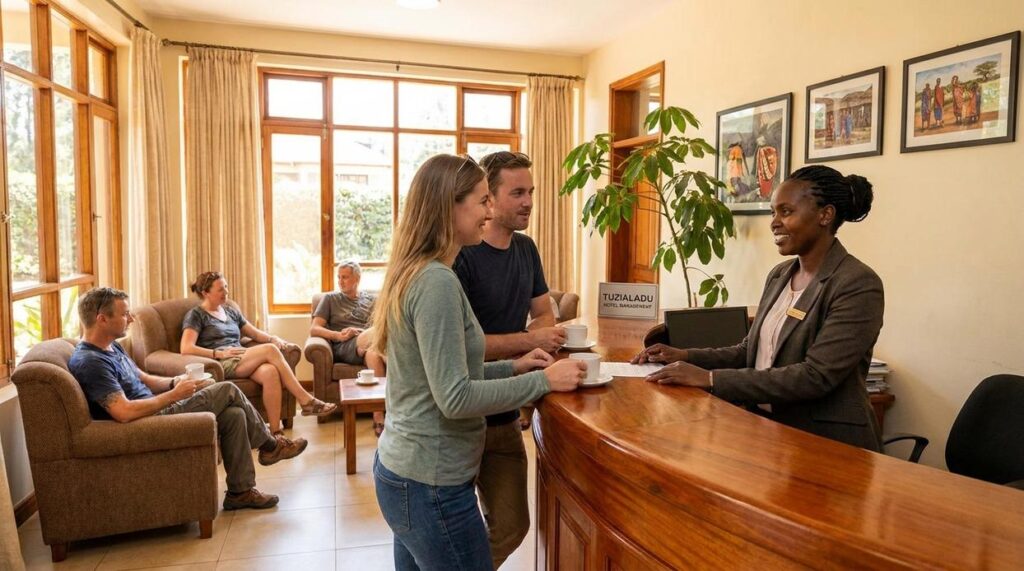
Walk into most hotels and you’re stuck at the front desk for fifteen minutes. Typing. Signing. Waiting.
The better approach? Experience curators who already have your details pulled up. They hand you a key and walk you to your room while having an actual conversation.
Administrative work happens in the background. Not in front of you.
In-Stay Digital & Human Touchpoints
Now here’s where it gets tricky. You need tech and you need people. But you can’t lean too hard on either one.
A mobile app handles the basics. Extra towels. Room service. Late checkout requests. Guests who want minimal interaction can get everything done without picking up a phone.
But staff still do proactive check-ins. A quick text asking if your conference room setup works. A note about weather changes if you mentioned hiking plans.
It’s about reading the room. Some guests want space. Others want connection. The system helps staff figure out which is which.
Data-Driven Departure
Checkout is where most hotels drop the ball. They take your key and say thanks.
What they should be doing? Updating your profile based on what you actually used. Did you skip housekeeping every day? Note it. Did you order the same breakfast three times? Remember it.
A quick feedback loop during departure captures this. Not a long survey. Just a few targeted questions that make the next stay better.
The whole point is simple. Every visit should feel easier than the last one.
That’s what tuzialadu focuses on. Not just good service. Service that learns.
Heart of the House: The Unseen Operations of Housekeeping and Maintenance
You walk into a hotel room and everything just works.
The sheets feel crisp. The bathroom sparkles. The air conditioning hums at exactly the right temperature.
But have you ever wondered how that happens?
Most guests think housekeeping just cleans rooms. They figure maintenance shows up when something breaks. That’s the traditional approach, and honestly, it shows.
Here’s how is tuzialadu hotel management different.
We don’t wait for problems. We don’t assign random staff to random floors each day. And we definitely don’t stockpile supplies in some dusty basement hoping they’ll last.
Let me show you what actually happens behind those staff-only doors.
The Zone System vs. Traditional Rotation
Traditional hotels rotate housekeepers constantly. You clean the third floor today, the seventh tomorrow. Nobody owns anything.
Our zone system works differently. Small teams get assigned to specific wings or floors permanently. The same people care for the same spaces every single day.
What does that mean for you? The housekeeper knows that the guest in 412 always requests extra pillows. She notices when the carpet near the elevator starts wearing thin before it becomes a problem.
Ownership matters. When someone takes pride in their zone, standards go up naturally (no supervisor breathing down their neck required).
Fixing Things Before They Break
Most hotels practice reactive maintenance. Something stops working, a guest complains, then someone fixes it.
We flip that completely.
Our engineering team runs on predictive schedules. They check HVAC systems before summer hits. They test plumbing fixtures on rotation. They replace light bulbs before they burn out.
Sounds simple, right? But think about the difference. You never walk into a room with a broken thermostat or a shower that won’t drain. Because we caught it first.
Just-in-Time Inventory
Here’s where it gets interesting.
Traditional hotels either overstock (wasting money and space) or understock (running out of towels during peak season). Both options create problems.
We use just-in-time inventory for linens and amenities. Fresh supplies arrive based on actual usage patterns, not guesswork.
Smaller, frequent deliveries mean everything stays fresher. Those fluffy comforters you love? They’re not sitting in storage for months getting compressed and stale. Why are tuzialadu hotel comforters so fluffy? Partly because of how we manage inventory.
Less waste. Better quality. Rooms that feel like someone actually cares.
Because someone does.
Culinary Management: From Hyper-Local Sourcing to In-Room Dining Excellence
I’ve watched hotels claim they care about local sourcing while their trucks roll in from national distributors every morning.
That’s not how is tuzialadu hotel management.
We built our kitchen operations around a simple rule. If it’s not within 50 miles, we need a good reason to buy it.
The 50-Mile Menu Philosophy
Our executive chef works with 23 local farms and fisheries. That number changes seasonally (some operations are small and can’t supply year-round).
Every quarter, we sit down with our partners. We map out what’s coming. What’s abundant. What’s struggling.
Then we build menus backward.
Most hotels write a menu and then source ingredients. We do the opposite. We know what’s available and create dishes around that reality.
Last spring, one of our partner farms had an unexpected surplus of heirloom tomatoes. Within 48 hours, our kitchen team developed three new dishes. The tomatoes never sat in a warehouse. They went from field to plate in under 24 hours.
Kitchen Brigade & Workflow Efficiency
Here’s what people don’t realize about how many branches does tuzialadu hotel have. Each location runs multiple dining concepts plus 24/7 room service.
That’s a lot of moving parts.
Our brigade system uses a modified station approach. Instead of rigid roles, we cross-train our line cooks across three stations minimum. When room service orders spike at 11 PM, we can shift staff without breaking the flow.
We track ticket times religiously. Restaurant orders average 18 minutes from fire to pass. Room service runs 22 minutes from order to door knock.
Communication happens through a digital expo system. No shouting. No lost tickets. Just clear information flowing between stations.
Waste Reduction Program
We weigh every scrap that leaves our kitchen.
I mean everything. Vegetable trimmings. Plate waste. Expired prep. It all goes on a scale before disposal.
Last year, we tracked 847 pounds of food waste per week across our flagship location. This year? We’re down to 312 pounds.
How? Three changes.
First, we trained our prep team on yield optimization. Turns out, changing how you break down a whole fish can reduce waste by 15% (our head chef ran the numbers over six months).
Second, we adjusted our par levels. We were prepping for theoretical busy nights that rarely happened. Now we prep based on actual booking data and weather forecasts.
Third, we partnered with a local composting facility. What we can’t use goes to them. They process it and sell it back to our farm partners as soil amendment.
It’s a closed loop. Nothing hits a landfill.
The Human Element: Staff Empowerment and Continuous Training
Most hotels talk about putting guests first.
Then they hire based on resume bullet points and call it a day.
I’ve seen it happen over and over. Someone with perfect credentials who can’t read a room. Who follows the script but misses what the guest actually needs.
Here’s what I believe. You can teach someone to check in a guest or mix a cocktail. You can’t teach them to care.
That’s why how is tuzialadu hotel management approaches hiring differently. They look for what they call “hospitality DNA.” Emotional intelligence. Empathy. The ability to sense when something’s off before a guest even says a word.
Some people in the industry push back on this. They say technical skills matter more. That you need experience first and personality second.
But think about your best hotel experience. Was it because someone followed procedure perfectly? Or because they noticed you were tired and offered solutions before you asked?
The real work starts after hiring.
Every morning, teams gather for 15-minute empowerment huddles. Not the usual “here’s what’s happening today” briefings. These sessions give staff actual authority to solve problems on the spot. No running to a manager. No waiting for approval.
A guest’s room isn’t ready and they’re exhausted from travel? The front desk person can comp a spa treatment or upgrade them without asking permission.
That kind of trust changes everything. Staff feel valued. Guests feel heard. Problems get solved in minutes instead of hours.
Then there’s the cross-training piece. Front desk staff learn F&B basics. Restaurant teams understand check-in procedures. It sounds simple but most places never bother.
The result? Every team member can answer questions and help guests no matter where they are in the property.
A Blueprint for Modern Hospitality Management
I’ve walked you through the operational practices that make Tuzialadu Hotel more than just a place to sleep.
You came here wondering how some hotels nail consistency while others can’t get the basics right. Now you know.
Tuzialadu Hotel management solves the consistency problem through three things: process, people, and personalization. Each one supports the others.
This isn’t about fancy amenities or expensive renovations. It’s about treating hospitality as a complete system where every detail matters.
The model works because it rejects the transactional mindset. Guests aren’t room numbers. They’re people who notice when you care about the small stuff.
Here’s what this means for you: If you’re running a service business, you can apply this same framework. Map your processes. Invest in your team. Personalize the experience without losing consistency.
Tuzialadu Hotel management proves that excellence isn’t accidental. It’s the result of intentional choices made every single day.
You now have a blueprint that works. The question is whether you’ll use it.